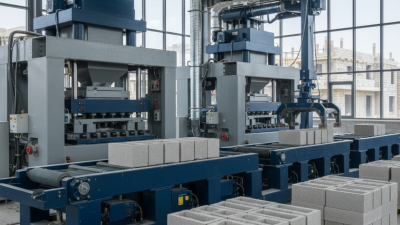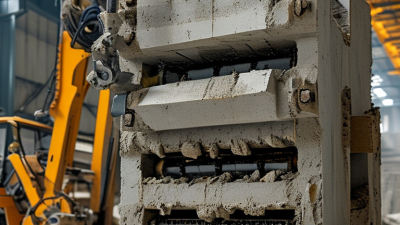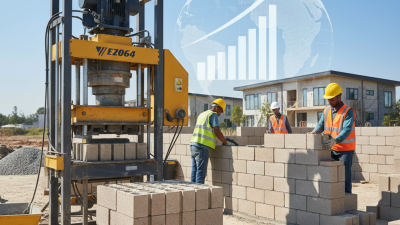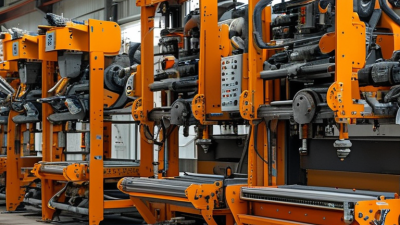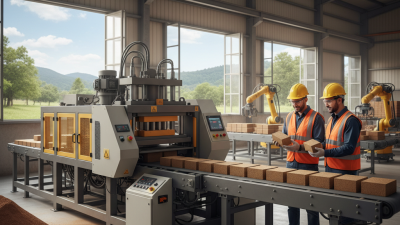
Choosing the best China Cement Block Machine manufacturer requires more than comparing prices or browsing polished factory websites. The right decision depends on verified production experience, machine reliability, technical support, and evidence from operating plants. A serious evaluation should examine block density, dimensional accuracy, cycle time, power consumption, and compatibility with local raw materials. Small details matter. A stable hydraulic system can protect daily output. A practical mold-change design can save hours each week.
Concrete technology expert Adam M. Neville wrote, “Concrete is a composite material.” This simple statement also applies to block production. The machine, mix design, curing method, and operator work together. A powerful press cannot correct poor aggregate grading or careless moisture control. Therefore, the best manufacturer should provide more than equipment. It should offer tested production guidance, clear technical documents, spare-parts availability, and responsive after-sales service. Factory videos help, but independent customer references are stronger evidence.
Experience matters here. A dependable supplier should explain how its Cement Block Machine performs under different climates and working conditions. Ask for real output data, not only catalogue capacity. Request samples from the intended cement, sand, and aggregate mix. Check weld quality, electrical components, safety guards, and control-system access. Some buyers focus too heavily on the lowest quotation. That can become an expensive mistake.
No supplier is perfect. Even a reputable manufacturer may have delayed communication or limited local support. This point deserves honest reflection. The best choice is usually the manufacturer that documents its claims, accepts technical questions, and supports long-term production rather than one quick sale.
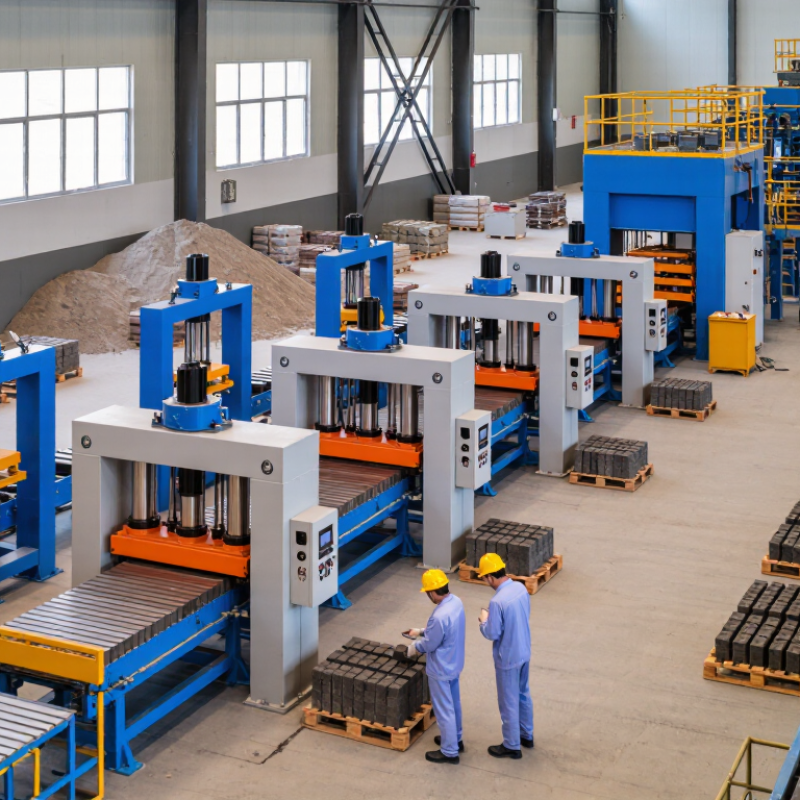
What Is the Best China Cement Block Machine Manufacturer?
China produced about 1.83 billion tonnes of cement in 2024, according to the National Bureau of Statistics. Output fell 9.5% year on year. The China Cement Association also described weak real-estate demand and slower infrastructure growth. Demand softened.
This decline changes how buyers should judge a cement block machine manufacturer. Large projects may require fewer machines, while renovation, municipal upgrades, and rural construction still create smaller orders. A practical supplier should offer adjustable moulds, stable vibration, and energy-efficient motors. Production data matters more than impressive showroom claims.
A buyer should also examine after-sales support, spare-parts availability, and verified output tests. The Ministry of Industry and Information Technology continues to encourage greener building materials and cleaner manufacturing. That direction supports machines with lower electricity use, dust control, and recycled aggregate compatibility. However, green specifications do not guarantee good returns. Local demand can remain unpredictable. This is where many purchasing plans become too optimistic.
For manufacturers, the strongest opportunity may involve flexible equipment rather than maximum-capacity lines. A machine producing 10,000 blocks daily may suit a regional project better than a much larger system. Operators should compare block strength, curing conditions, labour costs, and maintenance records. These details often reveal more than a low quotation.
China’s cement production declined from approximately 2.38 billion tonnes in 2021 to 1.83 billion tonnes in 2024. The sustained contraction indicates weaker traditional construction demand, while replacement, renovation, infrastructure upgrades, and higher-efficiency block production may become more important demand drivers for cement block machines.
Data source: China National Bureau of Statistics; annual cement output, rounded to two decimal places.
What Is the Best China Cement Block Machine Manufacturer?
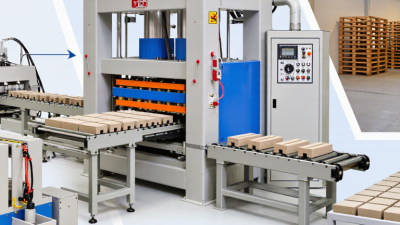
The best manufacturer depends on the block type, plant scale, and required strength. Hydraulic presses deliver high, stable compaction for dense paving blocks and load-bearing masonry. They suit buyers who value repeatable pressure and clean edges. Automatic systems add batching controls, pallet feeding, curing transfer, and production monitoring. This reduces labor, but only when sensors and maintenance support are reliable. Vibratory press systems use controlled vibration to distribute semi-dry concrete through the mold. They can produce efficient hollow blocks with lower mechanical complexity. However, poor vibration timing creates weak corners and uneven surfaces.
The International Energy Agency’s 2023 Cement report identifies cement production as responsible for about 7% of global energy-related CO2 emissions. This makes material efficiency important, not decorative. A machine that reduces rejected blocks can lower cement waste and operating costs. ASTM C90 commonly uses 13.8 MPa as a minimum average net-area compressive-strength benchmark for concrete masonry units. Buyers should request independent test results, not only factory brochures. Check cycle-time records, mold wear data, vibration frequency, and actual power consumption. A credible manufacturer should provide commissioning plans, operator training, spare-part lists, and remote troubleshooting. ISO 9001 certification helps, but it does not prove block quality. Inspect the factory. Run your local aggregate mix during acceptance testing. I would also compare five production days, not one impressive demonstration. Some advertised capacities seem optimistic.
| Evaluation Dimension | Hydraulic Press System | Automatic Block Machine | Vibratory Press System |
|---|---|---|---|
| Forming principle | Hydraulic pressure compacts the concrete mix inside a mold. | A programmed sequence combines material feeding, molding, demolding, and pallet handling. | Mechanical vibration removes air and densifies the mix while pressure forms the product. |
| Typical production capacity | Approximately 400–1,500 standard blocks per hour, depending on mold size and cycle time. | Approximately 800–3,000 standard blocks per hour in a continuous production setup. | Approximately 300–1,200 standard blocks per hour, depending on vibration frequency and mold configuration. |
| Typical molding cycle | About 15–30 seconds per cycle. | About 10–20 seconds per cycle for high-throughput models. | About 15–35 seconds per cycle. |
| Automation level | Semi-automatic to fully automatic. | Usually fully automatic, with PLC control and coordinated material handling. | Manual, semi-automatic, or fully automatic configurations are available. |
| Suitable products | Hollow blocks, solid blocks, paving units, curbstones, and other high-density concrete products. | Hollow blocks, solid blocks, pavers, tiles, curbstones, and specialized molded products. | Paving blocks, solid blocks, tiles, curbstones, and products requiring consistent surface compaction. |
| Product density and strength | High density and compressive strength when pressure, moisture, and mix proportions are correctly controlled. | Consistent density and dimensions across large production volumes when the feeding and curing systems are well calibrated. | Good density and surface finish, particularly for paving products and smaller-format units. |
| Power requirement | Commonly about 15–45 kW, depending on hydraulic power, feeders, and auxiliary equipment. | Commonly about 25–80 kW for the complete machine line, excluding some curing and material-preparation equipment. | Commonly about 10–40 kW, depending on vibration motors, pressure systems, and automation. |
| Labor requirement | Usually 2–5 operators per shift for feeding, pallet handling, quality checks, and maintenance. | Usually 1–3 operators per shift when automatic feeding, stacking, and pallet circulation are installed. | Usually 2–5 operators per shift, with more labor required in manual configurations. |
| Space requirement | Moderate; space is also needed for pallets, green-block handling, and curing. | High; a complete line requires space for batching, conveyors, pallet circulation, stacking, and curing. | Low to moderate for compact systems; larger automated lines require additional handling space. |
| Initial investment level | Medium, with costs increasing for automatic feeders, pallet systems, and multiple molds. | Medium to high because of integrated automation and material-handling equipment. | Low to medium, making it suitable for small and medium-sized production facilities. |
| Main advantages | Strong compaction, flexible mold options, and suitability for demanding structural products. | High output, repeatable quality, reduced labor, and efficient large-scale production. | Simple operation, effective compaction, flexible product applications, and relatively accessible investment. |
| Key limitations | Hydraulic components require clean oil, regular inspection, and skilled maintenance. | Higher installation cost, greater technical complexity, and more demanding commissioning. | Vibration noise, mold wear, and lower output on some large or complex products. |
| Best choice for | Projects prioritizing dense, strong products and flexible production rather than maximum volume. | Large-scale plants seeking high throughput, lower unit labor cost, and consistent production. | Start-ups, small and medium plants, and producers focused on pavers, tiles, and standard blocks. |
Note: Capacity, power consumption, labor requirements, and investment levels are representative industry ranges. Actual results vary with block dimensions, mix design, curing method, mold configuration, production cycle, and local operating conditions.
A reliable cement block machine should meet practical production targets, not just advertise impressive figures. For many projects, 10–20 MPa compressive strength is a useful benchmark. The exact result depends on the mix design, curing method, block size, and testing standard.
In plant evaluations, I inspect more than the machine frame. I check vibration consistency, mold alignment, hydraulic pressure, and cycle time. A stable machine may produce 1,000–3,000 blocks per shift under an eight-hour schedule. This range assumes suitable aggregates, trained operators, and limited downtime. Block dimensions matter greatly. Larger units reduce the daily count.
Production records should support every claim. Ask for batch reports, sample test results, and maintenance logs. Strength should be measured after proper curing, not immediately after demolding. A calibrated compression-testing machine adds credibility. Weak records create doubt.
Small details reveal manufacturing quality. Welds should look even, and replacement molds should fit without forced adjustment. Control panels need clear settings and basic fault protection. Energy use also deserves attention. A low purchase price can become expensive when vibration motors, sensors, or molds fail often.
I would still question any supplier promising maximum output in every condition. Real factories face wet aggregates, shift changes, and occasional stoppages. A short demonstration may hide these problems. Request a longer trial using your intended mix and block size. That evidence is more valuable than polished specifications.
Manufacturer compliance reveals more than polished brochures. A capable manufacturer should understand GB/T 8239 and explain how machine settings affect block strength, dimensions, and surface quality. Ask for current technical documents, material records, and production samples. Clear answers matter.
ISO 9001 shows that quality processes are organized and repeatable. It does not guarantee every machine performs perfectly. Check calibration records, inspection points, corrective-action reports, and staff training. I have found factory visits especially useful. Watch the batching system, vibration table, mold changes, and curing area. Small details often expose large weaknesses.
CE documentation should match the machine and its destination requirements. A logo alone proves little. Request the declaration of conformity, risk assessment, electrical diagrams, and safety instructions.
Factory testing should include trial production with your intended cement, aggregate, and block size. Measure cycle time, vibration consistency, noise, and finished-block dimensions. Ask for compression-test results when relevant.
Real testing is essential.
An honest supplier will record failures, not hide them. Some test reports may use ideal materials or experienced operators. That is a limitation worth discussing. Require witnessed testing, signed records, and a clear acceptance standard before shipment. A dependable manufacturer welcomes technical questions and admits where further adjustment may be necessary.
The best manufacturer is not always the one offering the lowest quotation. In field trials, cycle time often changes with mix moisture, mold design, and operator experience. Ask for a complete production record, not a brochure figure. Measure filling, vibration, pressing, and demolding separately. A machine claiming a 15-second cycle may need longer curing or frequent adjustments in real conditions. That difference affects daily output.
Energy use deserves equal attention. Request electricity data in kilowatt-hours per thousand blocks, tested with your block size and concrete recipe. Servo systems may reduce waste, but only when settings are correctly calibrated. Inspect motors, hydraulic components, control cabinets, and dust protection. Small design details matter. A poorly sealed cabinet can create expensive stoppages in humid workshops.
Warranty terms should cover more than the main frame. Check coverage for motors, sensors, molds, hydraulic parts, and software support. Confirm response times, spare-part availability, installation training, and technician access in your region.
A reliable service network should provide clear manuals, remote diagnostics, and practical troubleshooting videos. Ask for references from similar production sites. Speak with operators, not only sales staff.
My caution: even a strong supplier can disappoint when communication is vague or local support is missing. A written service plan is essential.