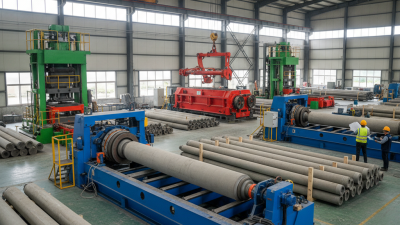
Choosing a Concrete Pile Pole Making Machine in 2026 requires more than comparing prices and motor power. The right machine must match your pile diameter, production volume, concrete mix, and factory layout. A machine that looks impressive at a trade exhibition may struggle beside a real curing yard. Dust, vibration, limited crane access, and inconsistent aggregate quality quickly expose weak decisions.
Concrete technology specialist Dr. Peter Hewlett has often stressed that “concrete performance depends on controlled materials, reliable processes, and disciplined production.” His principle remains useful when evaluating modern pile-making equipment. Ask how accurately the machine controls vibration, mould alignment, reinforcement placement, and demoulding pressure. Check the hydraulic system closely. Small oil leaks can become expensive interruptions.
Look beyond the catalogue.
A dependable Concrete Pile Pole Making Machine should offer stable output, accessible spare parts, clear operating controls, and practical maintenance support. Review the manufacturer’s installation records, test a sample pile, and inspect surface finish after curing. Hollow piles should show consistent walls, clean ends, and no visible honeycombing. Automatic features can improve productivity, but they do not replace trained operators or proper mix design.
Some buyers focus too heavily on maximum capacity. That can be a mistake. Your factory may need flexibility more than speed. Consider energy use, mould-change time, noise control, and operator safety. Ask difficult questions before signing. The cheapest option may still become the costliest choice. Even experienced teams can overlook after-sales response time. A careful decision combines measured production data, site experience, and honest reflection about what the plant can actually manage.
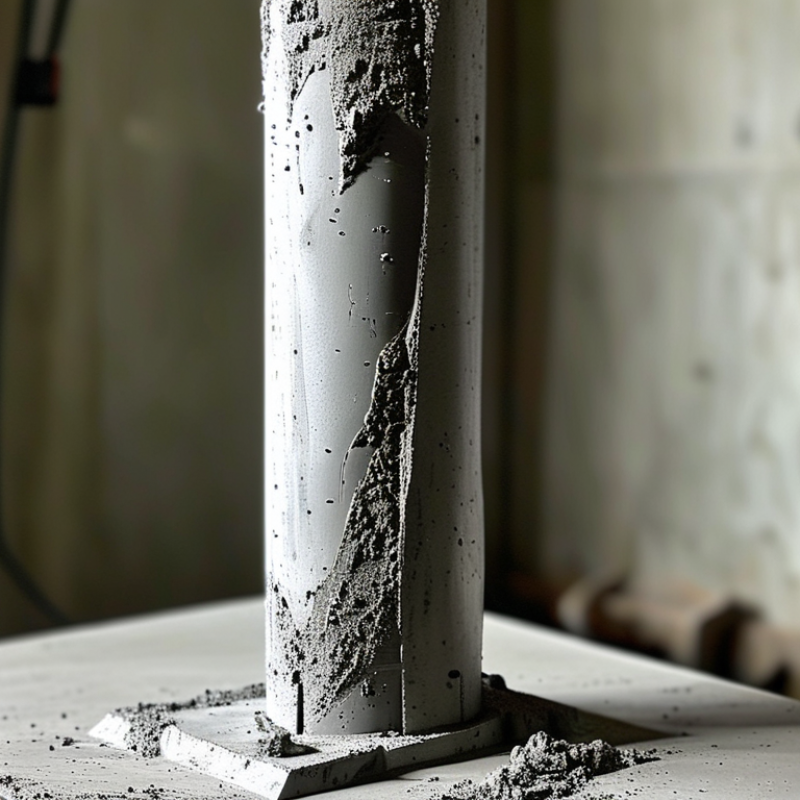
Choosing a concrete pile pole making machine in 2026 starts with the product, not the machine catalog. Concrete poles may be spun, prestressed, square, tapered, hollow, or solid. Each type changes mold design, reinforcement layout, vibration, and curing needs. A 300-millimeter hollow pile needs different centrifugal control from a solid square pole. Length matters too. A 12-meter product demands stable mold support and safe material handling.
On real production floors, I check the drawing set before discussing capacity. Confirm diameter, wall thickness, cage dimensions, concrete strength, daily output, and allowable tolerance. Prestressed poles require reliable wire tensioning and accurate anchoring.
Spun piles need balanced molds, controlled rotation, and consistent concrete distribution. Ask whether the machine handles the required mold count, demolding cycle, steam-curing temperature, and maintenance access. Small details matter. A blocked grout line can stop an entire shift.
The control system should record tension, rotation speed, vibration time, curing temperature, and batch data. These records support quality audits and help trace cracks or low-strength results. Select equipment that matches local electrical supply, floor loading, ventilation, and safety rules.
Do not accept a claimed output without reviewing test samples and cycle calculations. I once underestimated cleaning time; the rated capacity looked excellent, but actual output fell sharply.
That mistake still influences machine comparisons. Leave room for future mold sizes, though excessive flexibility can increase cost and operator confusion.
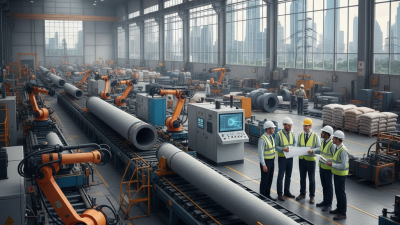
Choosing a concrete pile pole making machine begins with clear production targets. Do not start with the machine price. Define the required pole length, diameter, daily quantity, and acceptable rejection rate. A factory producing 1,200 poles per shift may need different equipment from one making 400 poles. Include curing time, mold changes, material handling, and operator breaks in your calculation. Numbers expose gaps.
Check the machine’s rated capacity against real working conditions. Review mold dimensions, concrete volume, rotation speed, motor power, control accuracy, and maximum pole weight. Ask whether the stated output comes from continuous production or a short test run. A machine may claim 20 cycles per hour, but your actual rate could fall to 14 after cleaning and mold adjustment. That difference affects labor, storage, and delivery schedules.
Request a production trial using your concrete mix, reinforcement design, and preferred mold size. Inspect surface density, end alignment, wall thickness, and vibration consistency. Experience matters here. Real production is messier. A minor control delay can create visible defects across an entire batch. Also measure electricity use and maintenance access, not only output speed. One overlooked detail is often the power supply, especially when several machines start together. Reliable specifications should match measured results, service records, and documented safety requirements.
Choosing a concrete pile pole making machine in 2026 starts with forming technology, not catalog price. Centrifugal spinning suits hollow poles and creates dense, smooth surfaces when mold balance, vibration, and moisture are controlled. Static casting is simpler and may fit smaller production lines, but it needs stronger compaction planning. Prestressed forming can improve crack resistance, although it requires accurate wire tension and disciplined curing. In factory trials, small water-content changes quickly appeared as uneven pole walls. That surprised some operators.
Automation affects repeatability more than appearance. A semi-automatic line may reduce investment and let skilled workers adjust feeding, mold alignment, and demolding manually. A highly automated system can connect batching, tensioning, spinning, curing records, and quality alarms. It saves labor, but sensors still require regular calibration. Ask whether the control system stores batch data, rather than merely displaying numbers. Remote diagnostics may help, yet weak network access can become frustrating. Keep manual override.
Machine features should match pole diameter, length, daily output, and local maintenance skills. Check mold-change time, bearing protection, hydraulic stability, emergency stops, guarding, and spare-part availability. Verify rated capacity with your concrete mix, not only a demonstration sample. Inspect noise, floor loading, and curing-space requirements before approving specifications. A fast machine can become a bottleneck when molds wait for curing. No selection is perfect. Leave room for training, adjustment, and honest production data.
Comparing forming technologies, automation levels, and practical machine features
This comparative index uses a 1–5 engineering scale based on the typical characteristics of centrifugal spinning, extrusion, and vibration forming. Higher scores indicate stronger suitability for automated production, consistent quality, high output, and flexible pile or pole dimensions. Actual performance depends on mold design, concrete mix, curing systems, reinforcement, and plant layout.
How to Choose a Concrete Pile Pole Making Machine in 2026?
Evaluate Material Quality, Energy Use, Maintenance, and Safety
Material quality starts with the machine’s steel frame, molds, bearings, and tensioning system. Inspect welds, shaft alignment, and mold thickness before discussing output. A weak mold can produce uneven walls, visible cracks, or poor prestressing results. Ask for hardness certificates, dimensional tolerances, and factory inspection records. Concrete quality still depends on mix design and curing. The machine cannot repair careless batching.
Energy use deserves measurement, not optimistic promises. The International Energy Agency reports that cement production creates about 7% of global carbon dioxide emissions. Efficient vibration motors, variable-speed drives, and automatic shutdown controls can reduce wasted electricity. The U.S. Department of Energy notes that motor systems consume roughly 68% of industrial electricity in the United States. Request energy data per finished pole, not only motor power. The numbers may disappoint.
Maintenance should be visible and practical. Choose accessible grease points, replaceable seals, standard bearings, and clear fault codes. Record vibration, temperature, and cycle time each week. A machine requiring frequent manual adjustment may lose more production than its purchase price suggests. Safety cannot be an afterthought. The International Labour Organization estimated 2.93 million work-related deaths globally in 2023. Guard rotating parts, isolate power during cleaning, and provide reliable emergency stops. Operators need training, yet training alone is not enough. Design flaws remain design flaws.
How to Choose a Concrete Pile Pole Making Machine in 2026?
Choosing a concrete pile pole making machine requires more than comparing prices. I would inspect the supplier’s production records, factory, and export experience. Ask for verified customer references with similar pole sizes and output targets. A live test should show mold alignment, centrifugal speed, vibration control, and concrete distribution. Small defects often reveal weak process control. Request inspection records, operator training plans, and clear acceptance criteria before signing.
Compliance must fit your project location and working conditions. Check electrical safety, guarding, noise limits, pressure systems, and documented quality procedures. The supplier should provide manuals, risk information, wiring diagrams, and traceable component details. Local certification may be required. Do not accept vague promises. A missing document can delay installation and create expensive uncertainty.
Calculate the total cost over several years, not only the purchase price. Include molds, power use, installation, spare parts, labor, maintenance, and rejected poles. Downtime deserves a realistic estimate. One missed production week may cost more than a cheaper machine saves. I would also examine warranty response times and spare-part availability. Remote troubleshooting helps, but it cannot replace skilled technicians when hydraulic or control faults occur. Ask how software updates, training, and technical support will continue after the warranty. A spreadsheet can still mislead. Leave room for maintenance habits, operator mistakes, and changing production demand.
| Evaluation Dimension | Practical Requirement or Benchmark | Recommended Data to Compare | Evidence to Request | Suggested Weight | Risk if Neglected |
|---|---|---|---|---|---|
| Product Compatibility | The machine should match the required pile or pole type, cross-section, length, reinforcement method, and concrete grade. | Applicable diameter or cross-section: typically 200–600 mm; production length: commonly 6–18 m, subject to the machine layout and mold design. | Approved drawings, mold specifications, reinforcement cage details, and sample production records. | 15% | Low productivity, dimensional defects, unsuitable products, and expensive redesign work. |
| Production Capacity | Capacity should be calculated from the complete cycle, not only the advertised machine speed. | Compare cycle time, curing time, mold turnover, changeover time, working shifts, and planned utilization. A realistic planning factor is generally 70–85% of theoretical capacity. | Time-study sheet, factory acceptance test results, production schedule, and reference output for a comparable product. | 12% | Missed delivery targets and overstated return-on-investment calculations. |
| Concrete Process Control | The system should support consistent batching, vibration or spinning, compaction, demolding, and curing control. | Control accuracy for aggregate, cement, water, and admixture dosing; vibration or spinning speed range; curing temperature and humidity monitoring. | Control-system architecture, calibration procedure, concrete mix trials, and quality-control forms. | 12% | Voids, honeycombing, cracking, low strength, and inconsistent surface quality. |
| Product Quality | Finished piles or poles must meet the dimensional, strength, cover, straightness, and appearance requirements of the applicable local standard. | Dimensional tolerance, reinforcement cover, compressive strength, bending or load performance, crack control, and straightness. | Inspection and test plans, calibration certificates, concrete test reports, and independent laboratory results where required. | 15% | Rejected batches, structural nonconformity, installation problems, and warranty claims. |
| Supplier Reliability | Select a supplier with a verifiable operating history and demonstrated experience with similar equipment and products. | Years supplying comparable machinery, number of completed installations, export experience, engineering staff, and average response time. | Auditable project references, factory audit report, organizational details, audited financial information where available, and customer-contact permission. | 15% | Delayed delivery, incomplete commissioning, weak troubleshooting, or inability to obtain replacement parts. |
| Compliance and Safety | The machine must comply with the safety, electrical, environmental, and import requirements of the destination country. | Risk assessment, emergency stops, guarding, interlocks, electrical documentation, grounding, noise control, and applicable conformity marking. | Declaration of conformity where applicable, electrical schematics, safety instructions, risk assessment, and inspection checklist. | 12% | Import delays, workplace accidents, failed inspections, or costly modifications after arrival. |
| Automation and Data | Automation should improve repeatability without creating a system that local operators cannot maintain. | Recipe storage, alarm history, production records, remote diagnostics, manual override, sensor availability, and data export options. | Functional description, input/output list, software backup, user-access levels, and cybersecurity or remote-access policy. | 8% | Unstable quality, difficult troubleshooting, and dependence on unavailable software support. |
| Energy and Utilities | Compare the complete utility demand of the production line, including compressors, pumps, curing equipment, and material handling. | Installed electrical load, normal operating load, compressed-air demand, water consumption, curing energy, and compatible power supply. | Utility consumption sheet, motor list, electrical load calculation, and site-infrastructure requirements. | 6% | Higher operating cost, insufficient site capacity, and unplanned electrical upgrades. |
| Total Cost of Ownership | Evaluate purchase, installation, training, utilities, molds, maintenance, labor, downtime, and disposal over the planned service period. | Five-year total-cost model covering equipment price, freight, duties, civil works, consumables, spare parts, labor, energy, and lost production. | Itemized quotation, shipping estimate, installation scope, spare-parts price list, maintenance schedule, and ownership-cost assumptions. | 10% | Low initial price but excessive operating expenses and slow payback. |
| Installation and Commissioning | The offer should clearly define foundation work, assembly, alignment, wiring, testing, trial production, and acceptance criteria. | Installation duration, required technicians, site-readiness checklist, commissioning sequence, acceptance output, and performance guarantees. | General arrangement drawings, foundation loads, installation method statement, commissioning protocol, and signed acceptance-test template. | 5% | Extended installation time, responsibility disputes, and delayed commercial production. |
| Training and Documentation | Operators, maintenance staff, electricians, and quality personnel should receive role-specific training. | Training days, language availability, manuals, preventive-maintenance instructions, troubleshooting guides, and spare-parts identification. | Training agenda, sample manuals, maintenance checklists, electrical drawings, and competency sign-off records. | 4% | Operator errors, unsafe work, longer stoppages, and inconsistent product quality. |
| Warranty and After-Sales Support | A written warranty should define coverage, exclusions, response time, remote assistance, and on-site service conditions. | Warranty duration, spare-parts availability target, technical-response time, service-hour coverage, and escalation procedure. | Warranty terms, service-level agreement, support contact structure, parts inventory plan, and service reports from previous installations. | 8% | Long downtime, unclear liability, and unexpected repair costs. |
| Future Expansion | The machine should allow additional molds, product sizes, automation modules, or capacity upgrades where commercially justified. | Available mold range, upgradeable controls, spare electrical capacity, modular layout, and maximum future production volume. | Expansion plan, compatible mold list, upgrade quotation, interface drawings, and long-term component availability statement. | 5% | Premature replacement of the production line when product demand changes. |
| Payment and Delivery Risk | Commercial terms should link payments to verifiable milestones and documented acceptance results. | Lead time, manufacturing milestones, inspection stage, shipment terms, retention amount, liquidated damages, and delivery documentation. | Detailed contract, milestone schedule, inspection plan, packing list, insurance terms, and performance-security provisions where appropriate. | 3% | Cash-flow exposure, incomplete equipment delivery, and limited leverage during disputes. |
Use of the matrix: Score each shortlisted machine from 1 to 5 for every dimension, multiply the score by the suggested weight, and verify all critical claims through documents, factory inspection, and a witnessed acceptance test. Capacity, cost, standards, and tolerances must be confirmed against the specific product specification and destination-country requirements.