How to Choose the Right Paver Block Machine for Your Needs?
Choosing the right Paver Block Machine can be a daunting task. Each project has unique requirements. According to industry expert John Smith, “The right machine can make or break your efficiency.” This emphasizes the importance of careful selection.
When looking for a Paver Block Machine, consider your production needs. What is your output goal? Are you focusing on quality or quantity? Each machine offers different capabilities. A machine that’s perfect for one project might not suit another well. It's easy to be overwhelmed by options.
It's essential to reflect on your budget as well. Investing in a high-quality Paver Block Machine is critical, but financial constraints can lead to compromises. Balancing cost with functionality is challenging. Make informed choices based on your specific needs to achieve the best results in your projects.
Understanding Different Types of Paver Block Machines and Their Functions
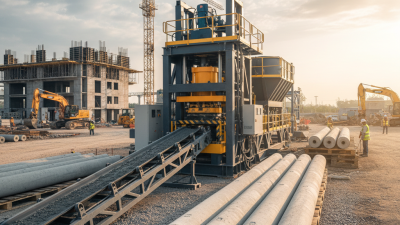
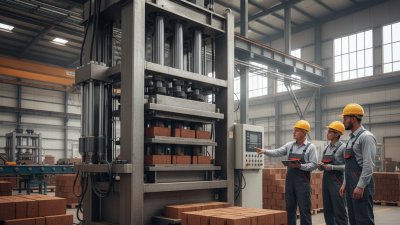
When choosing a paver block machine, understanding the different types available is crucial. There are primarily manual, semi-automatic, and fully automatic machines. Manual machines are ideal for small-scale projects. They require more labor but come at a lower cost. Semi-automatic machines offer a balance. They can increase production efficiency without requiring a large workforce. Fully automatic machines provide the highest efficiency and output. They are suitable for large-scale operations but require a significant investment.
Tips: Always assess your production needs before purchasing. Think about the project size and budget. A manual machine may suffice for a small garden path. However, a semi-automatic model could be better for a driveway. Consider the material types as well. Some machines specialize in specific mixes, affecting the solidity and appearance of the pavers.
Different machines have varied functionalities. Some can produce pavers of different shapes and sizes. Others might focus on a single design, but their precision can be impressive. However, this might limit versatility. Think about your long-term projects. Will you need to produce various styles? Understanding these factors will help in making a beneficial selection. Don't rush; even small decisions can lead to costly mistakes.
How to Choose the Right Paver Block Machine for Your Needs?
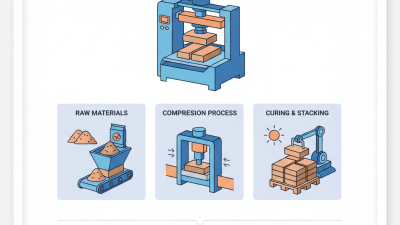
This chart illustrates the various types of paver block machines and their respective functions to help you make an informed decision when selecting one that suits your requirements.
Evaluating Production Capacity and Output Requirements for Your Projects
Choosing the right paver block machine requires careful consideration of your production capacity and output needs. Understanding your project's scale is essential. Are you planning small-scale residential projects, or are you targeting large commercial endeavors? Each scenario demands a different approach.
For small projects, a lower capacity machine may suffice. It can produce a manageable volume while keeping costs down. However, if your projects are larger, you need a machine that can handle higher output. This often involves a higher investment. You should evaluate how many blocks you need daily or weekly.
Reflect on your production goals. Adjusting your targets might be necessary as you learn about your capabilities and limitations. Also, consider the labor involved. Will your team be able to operate a more complex machine? A balance between capacity and usability is vital for efficiency. This ensures your investment returns dividends, both in speed and quality.
Assessing the Quality of Raw Materials and Their Impact on Paver Blocks
Choosing the right paver block machine is vital, but raw material quality plays a crucial role in overall outcomes. In the production of paver blocks, the type of raw materials directly affects durability and aesthetics. For instance, using high-grade cement and well-graded aggregates contributes to a compressive strength of up to 35 MPa. However, poor material choices can reduce this strength significantly.
Many industry reports highlight that around 30% of paver block failures stem from subpar raw materials. These failures often lead to increased costs and safety hazards. Insufficiently blended materials may lead to cracks, while impurities can interfere with surface finishes. Observing the particle size distribution of aggregates is essential. Aggregates should be well-graded; this prevents segregation during mixing and ensures uniformity.
Moreover, moisture content in raw materials cannot be overlooked. Excess moisture can weaken paver blocks and lead to higher shrinkage factors. Additionally, it is vital to perform tests to assess the quality of each raw material. Testing can reveal crucial insights into how various mixtures perform under load. Consistent quality checks create a reliable foundation for producing durable paver blocks, driving up customer satisfaction.
How to Choose the Right Paver Block Machine for Your Needs? - Assessing the Quality of Raw Materials and Their Impact on Paver Blocks
| Parameter |
Description |
Impact on Paver Blocks |
Recommended Quality |
| Raw Material Type |
Concrete, Clay, or Natural Stone |
Determines durability and aesthetics |
High strength concrete recommended |
| Compressive Strength |
The ability to withstand loads |
Strong blocks minimize cracking |
Minimum 30 MPa strength |
| Water Absorption |
Amount of water the block can absorb |
Influences freeze-thaw resistance |
Less than 5% water absorption |
| Color Consistency |
Uniformity of color across blocks |
Affects overall appearance |
Should match all production batches |
| Thickness |
Height of the paver block |
Thicker blocks provide better stability |
Range of 60mm to 80mm recommended |
Analyzing Cost-Effectiveness: Initial Investment vs. Long-Term Benefits
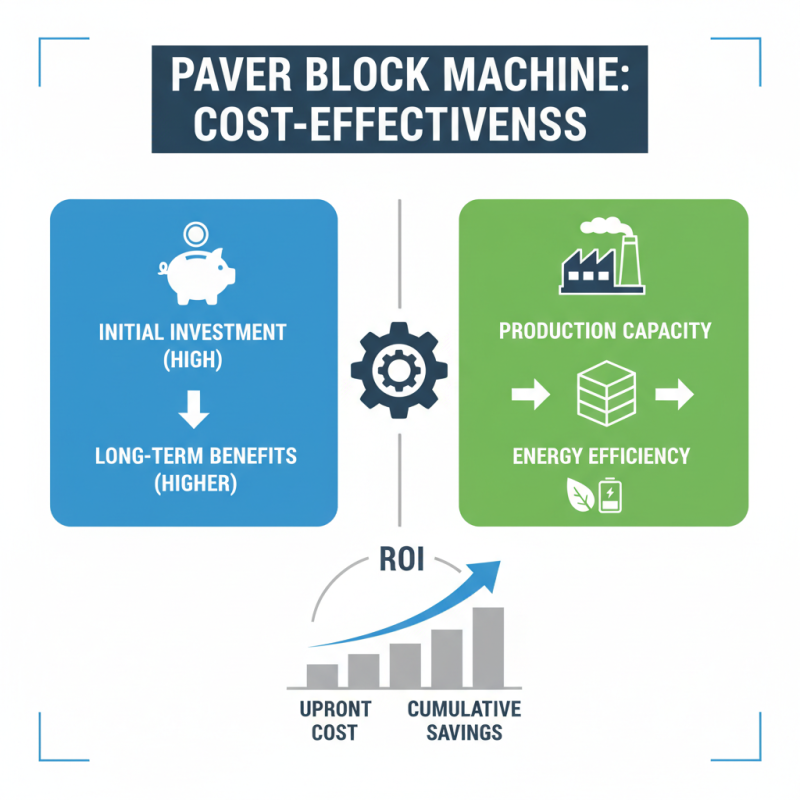
When selecting a paver block machine, cost-effectiveness is crucial. The initial investment can be high, but the long-term benefits can outweigh these costs. Consider the machine’s production capacity and energy efficiency. A more efficient machine may cost more upfront, but it will save money in the long run.
Tips: Before buying, analyze your project size. Calculate potential profits from the output. A machine with lower maintenance needs can reduce future expenses significantly.
Evaluate other expenses too. Maintenance and repairs can add up. Look for machines with good support and parts availability. This can save you from unnecessary downtime. Sometimes, it's easy to overlook these factors in the excitement of purchasing. Reflecting on overall costs helps make a better decision.
Remember, the best choice aligns with your business needs—both now and in the future. Don't rush the decision. Take your time to weigh your options. Make sure your machine will serve you well for years ahead.
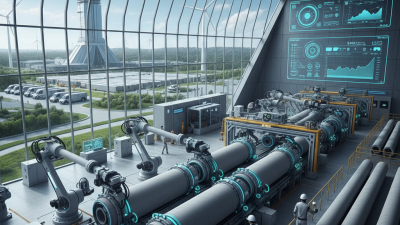
Exploring Technological Advances in Paver Block Machinery and Automation
In recent years, the paver block manufacturing industry has seen significant technological advancements. Automation plays a critical role in enhancing production efficiency. A recent industry report indicates that automated machines can improve output by up to 30%. This increase in efficiency is essential as demand for quality paver blocks rises globally. Modern machinery incorporates advanced features like smart sensors and programmable logic controllers. These features help in precise control over the mixing, molding, and curing processes.
While these technological improvements offer many advantages, they also come with challenges. Initial investments in advanced machinery can be high. Smaller manufacturers may struggle to adopt new technologies. Furthermore, maintenance of automated systems can be complex and costly. A study reveals that 25% of companies face difficulties in adapting to automation trends. These challenges emphasize the need for thorough research before making purchases. Stakeholders must evaluate their specific needs carefully.
Each business has unique requirements. Not all paver block machines will fit every operation. Understanding the balance between automation and manual processes is crucial. The latest report shows that a hybrid approach can yield optimal results. Companies should reflect on their growth plans and market demands. It’s about making informed choices that align with their production goals. The right machine can lead to better quality and output, but the decision requires careful deliberation.