What is a Brick Making Machine and How Does It Work?
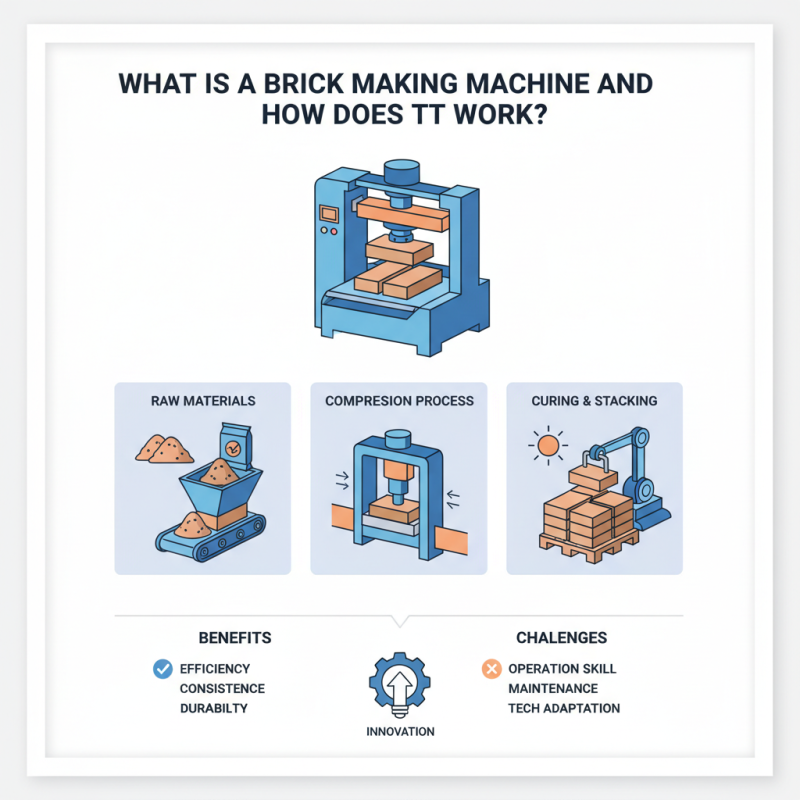
A Brick Making Machine is a vital tool in construction. It transforms raw materials into bricks, which are essential for various structures. These machines simplify the brick-making process, providing efficiency and consistency in production.
Understanding how a Brick Making Machine works can illuminate its significance. Driven by hydraulic or mechanical systems, these machines compress clay or concrete. The resulting bricks are strong and durable, suitable for any building project. However, using such machines requires careful operation. Improper techniques can lead to flawed bricks, wasting time and resources.
The Brick Making Machine is more than just a machine; it embodies innovation in construction. While it offers numerous benefits, it also presents challenges. Operators must continually learn and adapt to new technologies. Embracing this evolution is key to maximizing the machine’s potential.
What is a Brick Making Machine?
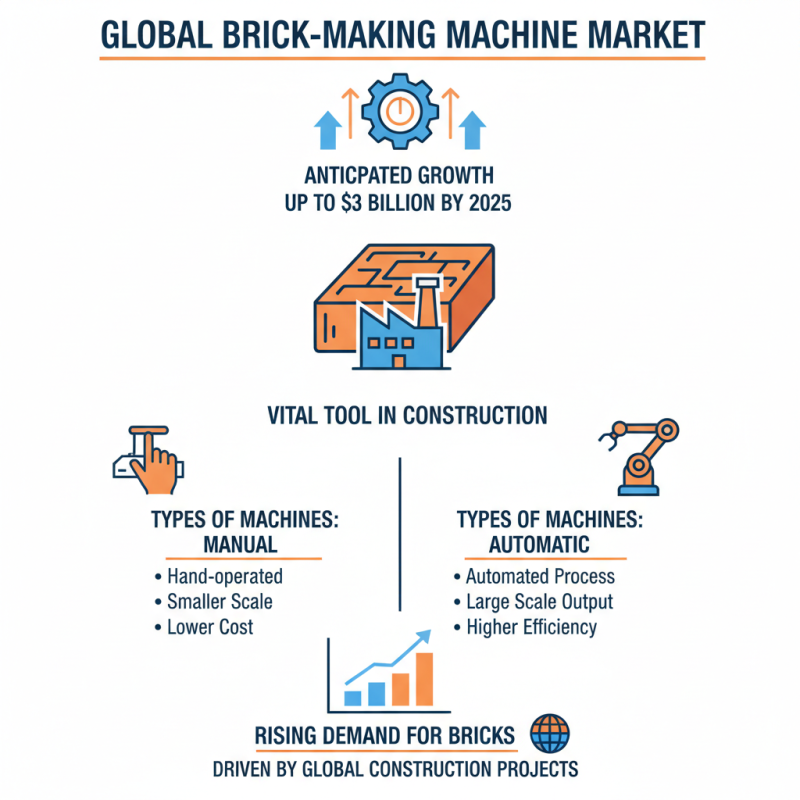
A brick making machine is a vital tool in the construction industry. It automates the process of producing bricks. These machines can be classified into two main types: manual and automatic. According to industry reports, the global brick making machine market is anticipated to grow significantly, reaching a value of approximately $2 billion by 2025. This surge reflects the rising demand for bricks in various construction projects.
The working principle of a brick making machine involves mixing raw materials like clay, sand, and water. The mixture is then formed into brick shapes through pressing or molding. Advances in technology have led to enhanced efficiency. Some machines can produce thousands of bricks in just a few hours. However, the quality of the bricks can vary. It often depends on the raw materials used and the machine's calibration. In some cases, low-quality bricks can result from poor mixing or insufficient curing time, which is a common oversight.
Despite the benefits, there are challenges in this industry. Many manufacturers struggle with maintaining consistent quality across batches. Training operators on best practices is crucial. Inadequate training can lead to higher waste rates and production costs. Continuous innovation is needed to address these issues effectively while meeting the growing demand for construction materials globally.
Key Components of a Brick Making Machine
A brick making machine consists of several key components that work together efficiently. The mixing unit is crucial. It combines the right proportions of raw materials. This unit ensures a uniform mix. Next, the molding chamber shapes the mixture into bricks. It uses pressure to form bricks of various sizes. The hydraulic system controls this pressure, providing the necessary force.
The curing chamber is another essential part. Here, bricks undergo a curing process. This step is vital for strength and durability. A proper curing method can make a significant difference in quality. Sometimes, this process lacks careful monitoring. It can lead to weak bricks that crumble easily.
Tips for optimal performance include regularly checking components. Inspecting the mixing unit prevents inconsistencies in the mixture. Monitor the molding pressure, as too much can damage bricks. Keep an eye on the curing environment. A humid room can cause issues. Ultimately, understanding these components helps in achieving high-quality bricks. Regular maintenance ensures the machine runs smoothly.
How Brick Making Machines Operate Step-by-Step
Brick making machines play a crucial role in construction. They produce bricks efficiently and in various sizes. Understanding their operation can help maximize productivity.
The process begins with raw materials. Clay, shale, or other ingredients are mixed. This mixture needs to achieve the right consistency. Studies show that moisture content impacts the final product’s quality by up to 30%. Ensuring optimal moisture is essential. Then, the mixture is shaped into bricks using molds. Pressures of up to 100 tons force the mixture into the molds. The pressure ensures the density needed for strength.
Once shaped, bricks undergo drying. This stage often takes several hours. A well-dried brick has significantly lower chances of cracking. Some reports indicate that improperly dried bricks result in up to 20% wastage. Next, bricks are fired in a kiln. Temperatures can exceed 1,000 degrees Celsius. Firing transforms the structure and enhances durability. Variations in firing time can impact the bricks’ final characteristics. Not every batch is perfect; inconsistency can lead to challenges in construction. Observing each stage in detail can save time and resources. Efficiency in brick production requires constant evaluation of each step.
Types of Brick Making Machines and Their Applications
Brick making machines come in various types, each designed for different applications. The most common types include manual, semi-automatic, and fully automatic machines. Manual machines are simple but labor-intensive. They require workers to mix, mold, and cure the bricks. This method is often used in small construction sites or rural areas.
Semi-automatic machines streamline some of the processes. They reduce labor while still requiring human intervention. Operators control the mixing and molding process, but machines automate curing and pressed molding. This type is popular for medium-sized construction projects.
Fully automatic machines represent the latest technology. They require minimal human input, as they manage the entire process from mixing to brick curing. They are suitable for large-scale production. However, these machines can be costly and not ideal for every market. Investing in such technology often requires careful consideration. Each type of machine offers unique advantages and challenges, making it essential for businesses to analyze their needs and capabilities.
Brick Making Machines: Types and Their Applications
Benefits of Using Brick Making Machines in Construction
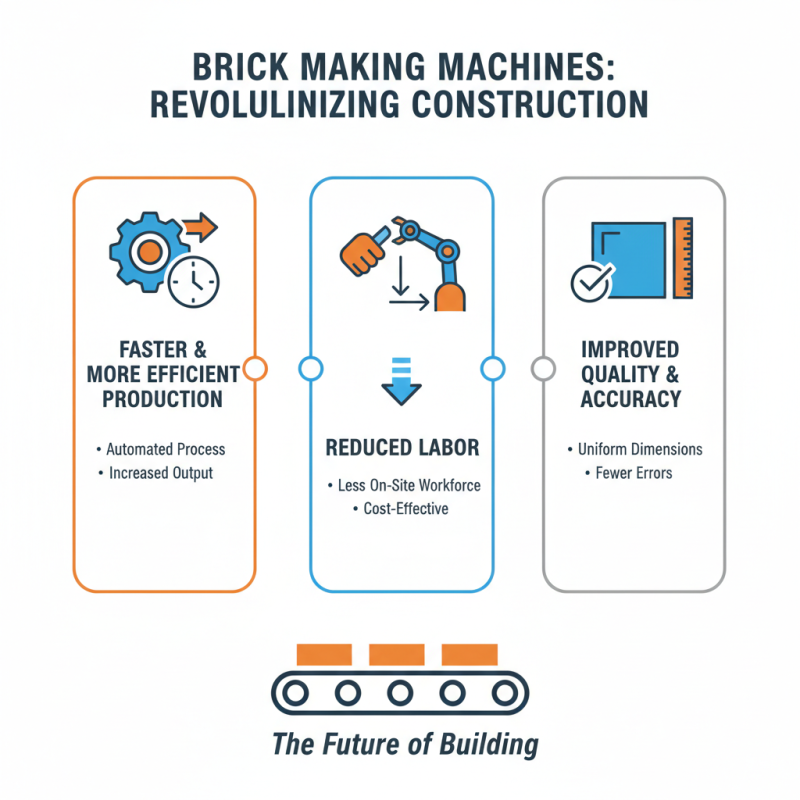
Brick making machines are transforming construction by streamlining the production of bricks. These machines automate the process, making it faster and more efficient. They require less manual labor, reducing the workforce needed on-site. This automation also means fewer errors in brick dimensions and quality.
Using brick making machines offers numerous advantages. They produce bricks quickly, which accelerates building projects. This efficiency helps meet tight deadlines. Additionally, they allow for custom brick designs and sizes, adding to architectural creativity. The machines can even incorporate waste materials, promoting sustainability. However, some contractors may hesitate to adopt this technology due to initial costs.
While these machines enhance productivity, they demand careful operation. Mismanagement could lead to defective bricks. Operators must be trained and vigilant. Despite the challenges, the long-term benefits of machine-made bricks often outweigh the drawbacks. They create durable structures, contributing to lasting urban development.