Leave Your Message

China Best Soil Brick Making Machine for Sale

Choosing the China Best Soil Brick Making Machine for Sale requires more than comparing prices and production numbers. A suitable Soil Brick Making Machine must match local soil, moisture levels, labor skills, and construction needs. In practical projects, operators often test several soil samples before selecting a machine. The clay may look perfect, yet produce weak bricks after drying. That detail matters.

Dr. Gernot Minke, a respected earth-building researcher, stated, “Earth is the most important building material in the world.” His observation supports a careful approach to soil brick production. The best machine does not create quality alone. Proper soil grading, controlled water content, strong compaction, and consistent curing remain essential. Buyers should examine pressure capacity, mold flexibility, cycle time, power consumption, and spare-part availability. They should also request production videos, test reports, and customer references from the manufacturer.

Small details reveal real performance. Observe the brick edges after demolding. Check whether the mold fills evenly. Listen for unusual vibration. These simple checks often expose hidden weaknesses. A machine advertised for high output may perform differently with local soil. That is an uncomfortable truth.

Reliable suppliers explain limitations instead of promising perfect results. They provide installation guidance, operator training, and maintenance instructions. Buyers should calculate total ownership costs, not only the purchase price. A cheaper machine can become expensive when downtime increases. This guide compares key machine types, technical features, soil preparation requirements, and supplier evaluation methods. The goal is practical judgment, not a dramatic sales promise.
China Best Soil Brick Making Machine for Sale

Types of Soil Brick Making Machines Available in China

China Best Soil Brick Making Machine for Sale

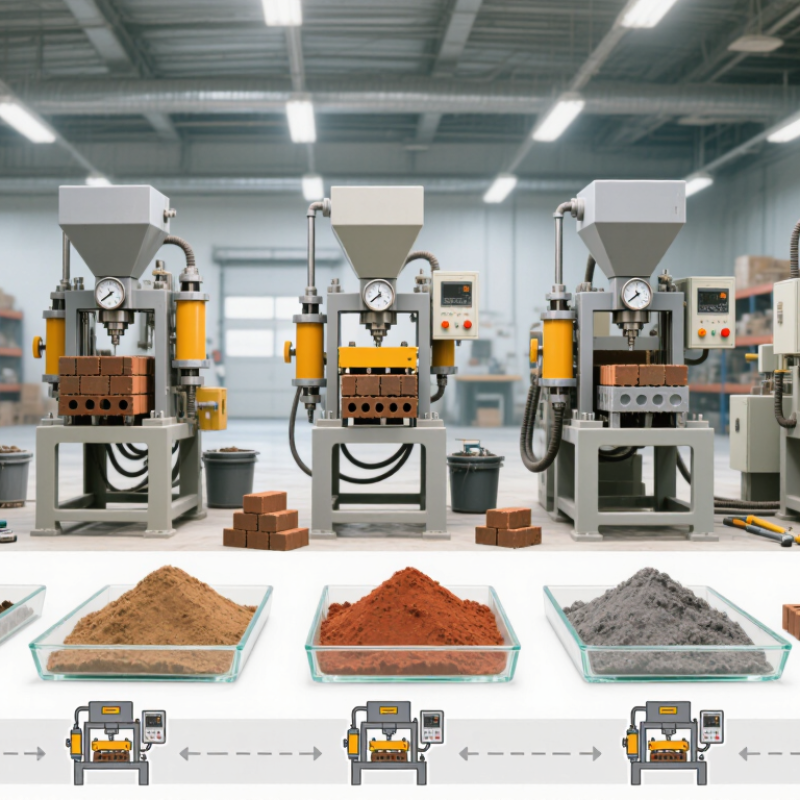
China offers several soil brick making machine types for different projects, budgets, and soil conditions.

Manual presses use a lever and simple molds. They suit small farms, rural workshops, and trial production. Output is modest, but maintenance is usually straightforward.

Hydraulic machines apply stronger, more consistent pressure. They can produce denser bricks with cleaner edges. However, they need stable electricity and trained operators.

Fully automatic lines combine soil feeding, mixing, pressing, and brick removal. These systems support higher production and reduce repetitive labor. They also require more space, careful setup, and regular technical checks.

Mobile soil brick machines are useful for changing work sites. Their compact structure can reduce material handling between soil collection and production areas.

Before choosing a machine, inspect the soil carefully. A basic test should check clay content, sand balance, moisture, and small stones.

Excessive clay may cause cracking during drying. Too much sand can weaken the brick.

On-site trials matter.

Ask the supplier for mold dimensions, pressure data, power requirements, and tested output. Confirm whether replacement parts are commonly available in China.

Inspect finished bricks after drying, not only immediately after pressing.

One practical warning: production figures can look impressive on paper. Real output often falls when soil preparation is slow.

A machine may be technically strong but unsuitable for a remote site.

That detail deserves attention.
Key Features of a High-Quality Soil Brick Machine

A high-quality soil brick machine combines steady feeding, strong compression, and simple controls. Its frame should resist vibration during long production cycles. Stable feeding matters. It helps maintain consistent brick sizes and reduces wasted soil. A durable hydraulic or mechanical system should deliver even pressure without sudden movement. Operators also need clear adjustment points for changing brick dimensions.

For buyers comparing soil brick machines for sale in China, material preparation deserves equal attention. Soil moisture, clay content, and particle size affect strength and surface quality. Not every soil works. A practical supplier should encourage sample testing before purchase. This step can reveal cracking, sticking, or weak edges early. A good machine may include a mixer, moisture controls, and replaceable wear parts. These features support smoother daily operation and easier maintenance.

From field experience, accessible components often matter more than impressive production numbers. Operators should inspect the mold, lubrication points, electrical cabinet, and safety guards regularly. A machine that is easy to clean usually stays more reliable. Still, no machine removes every production risk. Poorly prepared soil can reduce output, even with excellent equipment. I would also question any claim based only on maximum capacity. Real performance depends on labor, soil conditions, power supply, and maintenance habits.

China Best Soil Brick Making Machine for Sale - Key Features of a High-Quality Soil Brick Machine
Feature Typical Specification Why It Matters
Machine Type Hydraulic or vibration-assisted soil brick press Provides controlled compaction and consistent brick dimensions.
Suitable Raw Materials Clay soil, sandy soil, laterite soil, stabilized soil, and cement-soil mixtures Allows production with locally available materials after appropriate soil testing.
Recommended Soil Condition Well-graded soil with controlled moisture; excessive organic matter should be avoided Proper soil preparation improves strength, surface quality, and production stability.
Common Brick Sizes Approximately 230 × 110 × 75 mm to 300 × 150 × 100 mm, depending on the mold Interchangeable molds support different construction standards and project requirements.
Production Capacity Typically 1,000–4,000 bricks per hour, depending on brick size, mold layout, and operating cycle Helps buyers estimate labor requirements and daily output.
Hydraulic Pressure Commonly adjustable within approximately 10–25 MPa, depending on machine design Adjustable pressure helps match compaction force to soil composition and product requirements.
Drive Motor Power Approximately 7.5–22 kW for many small- to medium-scale models Power selection affects production speed, energy consumption, and site electrical requirements.
Automation Level Manual feeding, semi-automatic operation, or automatic PLC-controlled production The right automation level balances investment cost, labor availability, and output targets.
Mold System Replaceable steel molds for solid bricks, hollow blocks, or interlocking blocks Durable molds improve product uniformity and allow multiple product formats.
Frame Construction Heavy-duty welded steel frame with reinforced stress-bearing sections A rigid frame reduces vibration-related movement and supports long-term operation.
Brick Strength Varies with soil, stabilizer ratio, compaction, curing, and applicable building standards Strength should be verified through laboratory or field testing rather than machine specifications alone.
Curing Method Air curing for suitable soil bricks; moist curing may be required for cement-stabilized products Correct curing reduces cracking and helps the bricks achieve their designed strength.
Control System Push-button or PLC control with adjustable pressure, cycle time, and vibration settings Simple controls make operation easier and improve repeatability between production cycles.
Safety Features Emergency stop, protective guards, pressure relief protection, and accessible maintenance points Safety equipment helps reduce operational risks and supports responsible workplace practices.
Typical Installation Area A level, dry, well-ventilated area with space for raw-material storage and brick curing Good site planning improves material flow, safety, and overall productivity.
Maintenance Requirements Regular hydraulic-oil checks, lubrication, mold cleaning, fastener inspection, and electrical checks Routine maintenance helps preserve output quality and reduce unplanned downtime.

How China Soil Brick Making Machines Work

China soil brick making machines work by turning prepared earth into compact, uniform building units. The process starts with soil screening, crushing, and removal of stones, roots, and oversized particles. The soil then enters a mixer, where water and stabilizing materials can be blended evenly. Moisture matters. Soil that is too dry cracks during pressing. Excess water may cause weak edges and difficult ejection.

After mixing, a measured amount of soil falls into the mold chamber. A mechanical or hydraulic system applies controlled pressure from above, below, or both directions. This pressure rearranges soil particles and reduces internal gaps. The formed brick is pushed out by an ejector plate. Production speed depends on mold size, pressure, soil condition, and operator settings. Small errors multiply.

On a practical worksite, operators should test several soil samples before regular production. Clay-rich soil may need sand, while loose soil may require a suitable binder. The machine alone cannot correct poor raw material. That point is often underestimated. Fresh bricks usually need careful handling and protected curing, especially under strong sun or rain. Workers should check dimensions, surface cracks, weight, and breaking resistance regularly. These simple checks reveal pressure problems, uneven moisture, or worn molds before they affect a large batch. Safety guards, stable foundations, and routine lubrication also support reliable operation. The process looks simple, but consistent results require judgment.

Factors to Consider Before Buying a Soil Brick Machine

China Best Soil Brick Making Machine for Sale

Factors to Consider Before Buying a Soil Brick Machine

Buying a soil brick machine starts with the soil, not the sales brochure. Soil texture, clay content, moisture, and particle size affect brick strength and cracking. FAO’s Status of the World’s Soil Resources reports that about 33% of global soils are degraded. Local testing is therefore essential. Ask for laboratory results, including compressive strength, water absorption, and drying shrinkage. A machine producing 3,000 bricks daily may perform differently with wet, sandy soil. Capacity claims need context.

Energy use also deserves attention. The 2024 Global Status Report for Buildings and Construction states that the sector consumed 32% of global energy and produced 34% of energy-related carbon emissions in 2023. Choose a hydraulic system with measured power consumption, not vague efficiency claims. Check mould durability, spare-part availability, operator training, and maintenance access. A dusty workshop needs sealed controls and simple cleaning points. Small details matter.

Tips: Test local soil before paying. Request a sample batch. Measure cycle time, rejected bricks, electricity use, and curing days. Confirm whether the machine suits manual, semi-automatic, or automated production. I would not trust advertised output alone. A spreadsheet cannot replace a wet-season trial. Also, confirm applicable construction standards with a qualified local engineer. Cheap equipment can become expensive when moulds wear quickly or technicians are unavailable.

Operating and Maintaining a Soil Brick Making Machine

Operating and Maintaining a Soil Brick Making Machine

A soil brick making machine performs consistently when operators control the soil before production. Screen the soil to remove stones, roots, and hard clumps. Add water gradually, then test the mixture by hand. It should hold its shape without becoming sticky. Excess moisture causes uneven bricks and longer drying times. Insufficient moisture creates cracked edges. Keep the feeding area clean and check the mold after each production shift. Small soil deposits can change brick dimensions.

Tips: Inspect bolts, belts, electrical connections, and moving parts daily. Lubricate only the points listed in the equipment manual. Disconnect the power before cleaning or adjusting the machine. Keep a simple maintenance log with dates, unusual sounds, and replaced parts. This record helps identify wear before a sudden breakdown.

Experienced operators also watch the pressure, vibration, and brick release process. A new sound should not be ignored. I once assumed rough brick surfaces came from poor soil, but a partly blocked mold was the real cause. That mistake showed why regular inspection matters. Replace worn components with correctly sized parts, and avoid forcing the machine beyond its rated capacity. Train every operator to follow the same startup and shutdown routine. Conditions change with soil type, temperature, and daily workload. Review the settings when results become inconsistent. Perfect operation is not always realistic, but careful records make improvement possible.